
pixidev
  • HOME
  • ABOUT
  • SERVICE
    • UI/UX Design
    • Website Design & Development
    • Digital Marketing
    • Mobile App Development
    • Odoo ERP Solutions
  • Industries
    • Fintech Industry
    • Banking Industry
    • E-Commerce Industry
    • eLearning Industry
    • SaaS Industry
    • ERP Industry
    • Law Firms
    • Investment Industry
    • Transforming the Construction
  • PORTFOLIO
  • BLOG
Work with us
HOME
ABOUT
SERVICE
Industries
PORTFOLIO
BLOG
Work with us

Get in touch

+971 50 952 4733contact@pixidev.com

#M01A, Saleh Bin Lahej Building, Al Garhoud, Dubai, UAE

12/23, Rajia Sultana Road, Mohammadpur Dhaka, Bangladesh

Follow Us

FacebookInstagramLinkedInYouTube

Apr 30, 2025

What Are the Differences Between Raster and Vector Graphics?

admin

Writen by admin

Viewed 4 min read

What Are the Differences Between Raster and Vector Graphics?

Understanding Raster vs Vector Graphics

In digital design, understanding the differences between raster and vector graphics is essential for artists, graphic designers, and anyone involved in visual communication. Each format has unique characteristics, advantages, and applications, making it crucial to choose the right one for your needs. This comprehensive guide will explore the distinctions between raster and vector graphics, exploring their definitions, uses, strengths, and weaknesses. By this article’s end, you will understand better when to use raster images and when to opt for vector images.

What Are Raster Graphics?

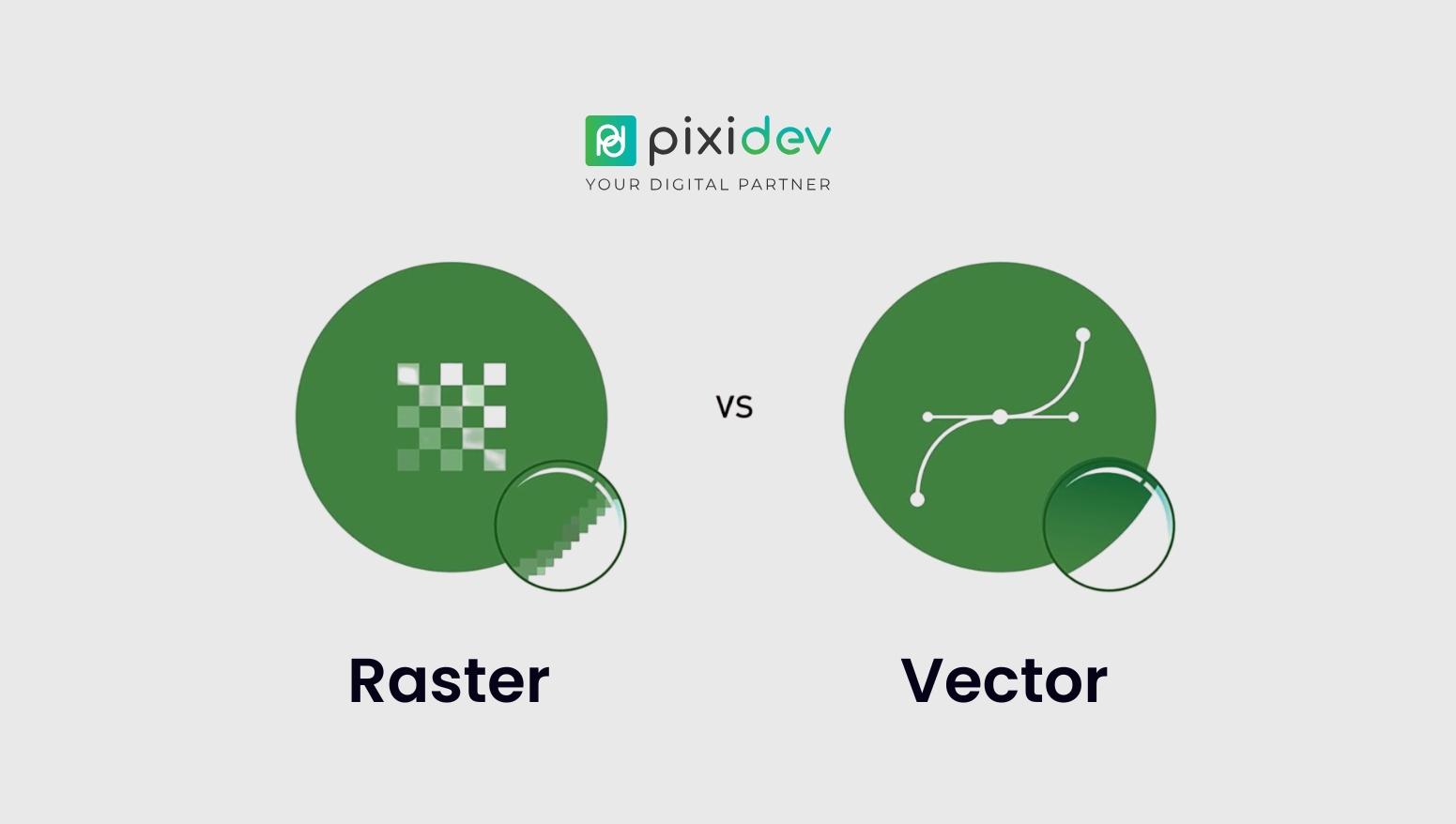
Raster graphics, or bitmap images, comprise a grid of individual pixels. Each pixel has its colour value, forming a complete image together. Common raster formats include JPEG, PNG, GIF, and BMP. Raster graphics are widely used in photography, digital art, and web design due to their ability to display intricate details and colour gradients.

Advantages of Raster Graphics

  1. Detail and Complexity: Raster images can capture intricate details and subtle colour variations, making them ideal for photographs and complex artwork.
  2. Widespread Compatibility: Raster formats are universally supported across various platforms and software, making them easy to share and use.
  3. Rich Color Depth: Raster graphics can represent millions of colours, providing a vibrant and realistic appearance.

Disadvantages of Raster Graphics

  1. Resolution Dependency: Raster images’ quality depends on their resolution. Enlarging a raster image beyond its original size can lead to pixelation and loss of detail.
  2. File Size: High-resolution raster images can have large file sizes, which may impact website loading times and storage requirements.
  3. Limited Scalability: Unlike vector graphics, raster images cannot be scaled without compromising quality, making them less versatile for certain applications.

What Are Vector Graphics?

Vector graphics, on the other hand, are created using mathematical equations to define shapes, lines, and colours. Unlike raster images, vector images are not made up of pixels, allowing them to be resized infinitely without losing quality. Common vector formats include SVG, EPS, AI, and PDF. Due to their scalability and clean lines, vector graphics are widely used for logos, illustrations, and typography.

Advantages of Vector Graphics

  1. Scalability: Vector graphics can be resized to any dimension without losing quality, making them perfect for logos and graphics that must be displayed in various sizes.
  2. Smaller File Sizes: Vector files are generally smaller than their raster counterparts, which is advantageous for storage and web usage.
  3. Editability: Vector graphics are easily editable, allowing designers to modify shapes, colours, and sizes without affecting the overall quality.

Disadvantages of Vector Graphics

  1. Limited Detail: While vector graphics excel in clean lines and shapes, they may struggle to capture the intricate details in photographs.
  2. Compatibility Issues: Some software may not support certain vector formats, posing challenges in sharing and collaboration.
  3. Learning Curve: Creating vector graphics often requires specialized software and skills, which may be a barrier for beginners.

Raster Images vs Vector Images: A Comparative Analysis

To understand the differences between raster and vector graphics, let’s compare their key features better.

Feature   

Raster Graphics  

Vector Graphics    

Composition  

Made of pixels  

Made of paths and mathematical equations

Scalability  

Resolution-dependent

Infinitely scalable  

File Size  

Generally larger  

Generally smaller 

Detail

High detail for complex images  

Limited detail for complex images  

Editing   

Difficult to edit without loss of quality

Easily editable without quality loss

Best Uses 

Photography, digital art

Logos, illustrations, typography

When to Use Raster Graphics

Raster graphics are ideal for situations where detail and colour depth are paramount. Here are some scenarios where raster images shine:

  1. Photography: When working with photographs, raster graphics are the go-to choice due to their ability to capture fine details and colour gradients.
  2. Web Design: Raster images are commonly used for backgrounds, banners, and other visual elements that require rich colours and textures.
  3. Digital Painting: Artists often prefer raster graphics for digital painting as they allow for intricate brushwork and detailed textures.

When to Use Vector Graphics

Vector graphics are best suited for applications that require scalability and clean lines. Consider using vector images in the following situations:

  1. Logos and Branding: Logos must be resized for various applications, making vector graphics the perfect choice for creating scalable designs.
  2. Illustrations: Vector graphics are ideal for illustrations that require precise lines and shapes, such as icons and technical drawings.
  3. Typography: When designing text-based graphics, vector formats ensure that the text remains crisp and clear at any size.

Choosing Between Raster and Vector Graphics

The choice between raster graphics and vector graphics ultimately depends on the specific requirements of your project. Understanding the differences between raster and vector graphics will empower you to make informed decisions that enhance your design. Whether you need the intricate details of raster images or the scalability of vector images, each format has its strengths and weaknesses. You can select the most appropriate format by carefully considering the context in which you will use these graphics.

Related Article

Unlocking the Magic of Digital Marketing with PixidevUnlocking the Magic of Digital Marketing with Pixidev

Design . Aug 05, 2026

Unlocking the Magic of Digital Marketing with Pixidev

Read More
How to Use Typography Effectively in Digital Graphics?How to Use Typography Effectively in Digital Graphics?

Design . Aug 04, 2026

How to Use Typography Effectively in Digital Graphics?

Read More
15 Things Every Real Estate Website Should Have15 Things Every Real Estate Website Should Have

Real Estate . Jul 01, 2026

15 Things Every Real Estate Website Should Have

Read More
Pixidev digital agency modern office background
pixidev

We are an all-in-one creative digital agency, simplifying digital complexities and empowering brands all over the world.

Information

  • About Company
  • Porfolio
  • Services
  • Blog
  • Contact

Contact Us

  • HQ: #M01A, Saleh Bin Lahej Building, Al Garhoud, Dubai, UAE
  • BD: 12/23 Razia Sultana Road, Mohamadpur, Dhaka, Bangladesh
  • +971 50 952 4733
  • contact@pixidev.com

Have a project in your mind?

Contact Us

08 : 00 AM - 5 : 00 PM

Monday - Friday

© 2022 - 2026 | Alrights reserved by Pixidev · Privacy Policy