
Real EstateJul 01, 2026

Writen by Pixidev
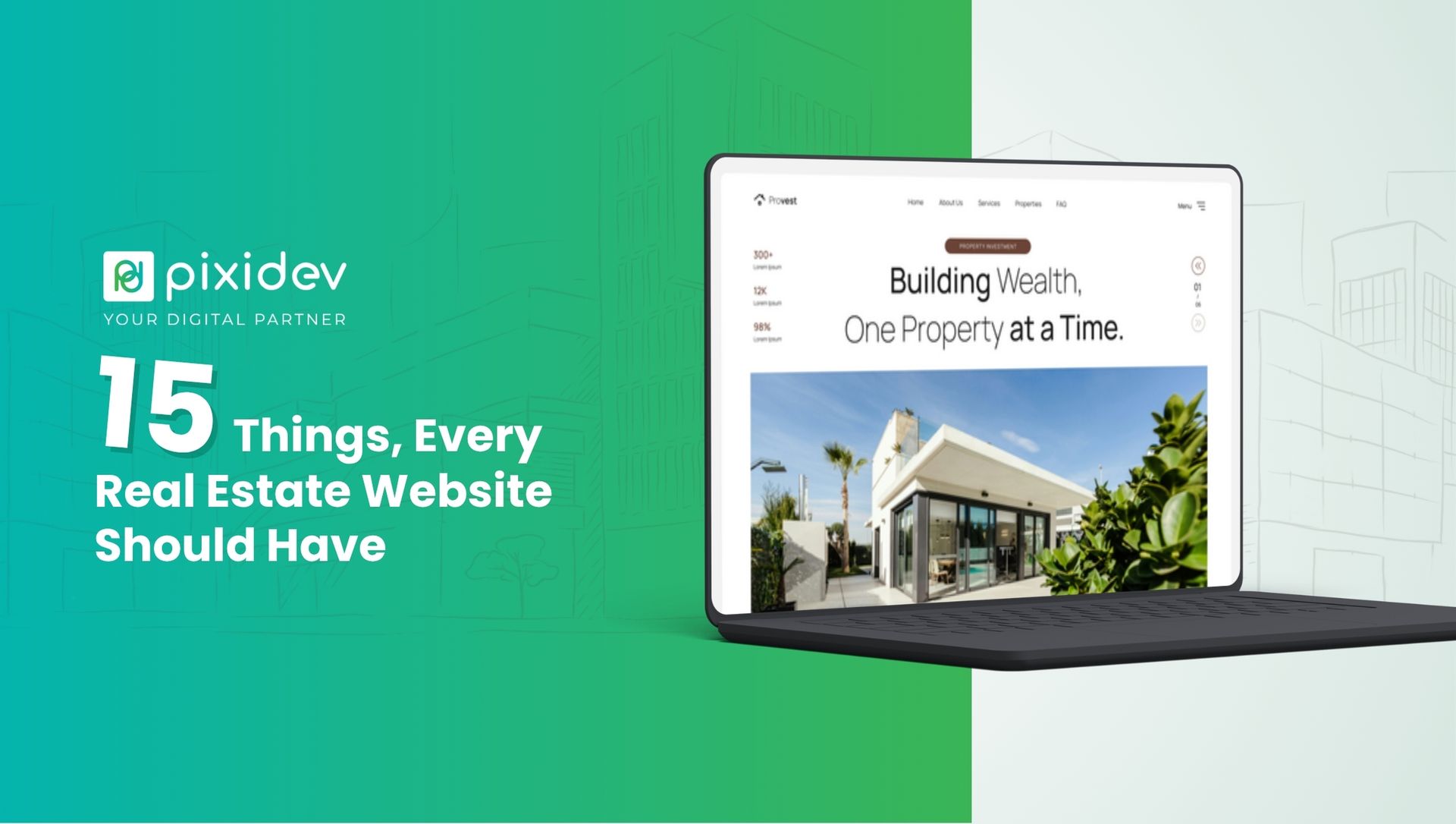
In today’s digital age, having a robust real estate website is crucial for success in the real estate market. A well-designed real estate website attracts potential clients and provides them with the information they need to make informed decisions. At Pixidev, a leading real estate website design company, we understand the importance of creating user-friendly and engaging websites. This blog will discuss 15 essential elements every real estate website should have. Whether you want to build a new real estate website or improve an existing one, these tips will help you create a site that stands out.
A well-organized real estate website design is essential for providing a good user experience. Visitors should be able to quickly find the information they are looking for without digging through multiple pages. A straightforward menu, intuitive layout, and well-placed search bar are critical elements of easy direction-finding.
Fluid Grid Layouts
Flexible Images and Media
Media Queries
Clear Menu Structure
Breadcrumbs
Search Bar
Visual content is crucial for a real estate website. High-quality images and videos of properties can make a significant difference in attracting potential buyers. Professional photography and video tours help showcase properties in the best light, giving visitors a real sense of the space.
Professional Photography
360-Degree Virtual Tours
Photo Galleries
Detailed property listings are the backbone of any real estate website. Each listing should include essential information such as price, location, size, and features. Additionally, integrating a search function that allows users to filter properties based on their preferences is a valuable feature.
Descriptions
Specifications
Maps and Directions
Advanced search filters allow users to narrow their property search based on specific criteria, making finding properties that meet their needs more leisurely.
Filter Options
Sort Options
Save Search
Interactive maps are a great addition to a real estate website design. They allow users to visualise the location of properties and explore nearby amenities such as schools, parks, and public transportation. That helps potential buyers understand the neighbourhood better and make informed decisions.
Google Maps Integration
Neighbourhood Information
Street View
Lead capture forms are essential for converting website visitors into potential clients. They allow users to request more information, schedule viewings, or contact agents directly.
Contact Forms
Call-to-Action Buttons
Live Chat
Customer testimonials and reviews add credibility to your real estate website. Positive feedback from previous clients can build trust with potential buyers and sellers. Include a dedicated section for testimonials on your website to showcase your satisfied clients.
Client Feedback
Ratings
Video Testimonials
A blog and resources section can help establish your real estate website as a go-to source for industry information. Regularly updated content on market trends, buying and selling tips, and community news can attract visitors and keep them engaged.
Regular Blog Posts
Guides and EBooks
FAQs
Search engine optimisation (SEO) is essential for driving traffic to your real estate website. To improve your site’s visibility on search engines, incorporate relevant keywords, such as real estate website design, throughout your content. Work with a professional SEO company to ensure your site is fully optimised.
Keyword Research
On-Page SEO
Technical SEO
Integrating social media into your real estate website can help you reach a wider audience. Include links to social media profiles and share buttons on your property listings and blog posts. That makes it easy for visitors to share your content with their networks.
Share Buttons
Social Feeds
Follow Buttons
Agent profiles introduce the team behind the real estate website, adding a personal touch and building trust with potential clients.
Agent Bios
Contact Information
Client Reviews
A mortgage calculator is a valuable tool for any real estate website. It allows potential buyers to estimate their monthly mortgage payments based on the property’s price, down payment, interest rate, and loan term, helping visitors understand their financial options.
Interactive Tool
Instant Results
Affordability Insights
Security features protect your website and users’ data from cyber threats, ensuring a safe browsing experience.
SSL Certificates
Secure Payment Gateways
Regular Updates
Analytics and reporting tools provide insights into your website’s performance, helping you make data-driven decisions to improve user experience and marketing strategies.
Traffic Analysis
Conversion Tracking
Performance Metrics
1. Make finding what people are looking for easy: Ensure your website is user-friendly with intuitive navigation. Information should be easily accessible, using clear and concise language without jargon.
2. Keep your website updated: Regularly update your site with new content, including listings, blog posts, and social media updates. That keeps your website fresh and relevant for potential clients.
3. Ensure your website is mobile-friendly: With the increasing number of people browsing on smartphones and tablets, your website must be mobile-friendly for easy viewing on any device.
4. Optimize your website for search engines: Improve your website’s visibility by optimising it for search engines. Use relevant keywords throughout your content to help potential clients find your site when searching for homes online.
5. Get feedback from others: After creating your website, seek input from friends, family, and colleagues. That can help you identify areas for improvement and enhance the overall user experience.
For a standout real estate website, trust Pixidev’s design expertise. Contact us today to partner with a leading real estate website design company and a top-class responsive web design company to boost your online presence.