
Jul 11, 2025

Writen by Fathima Hafna
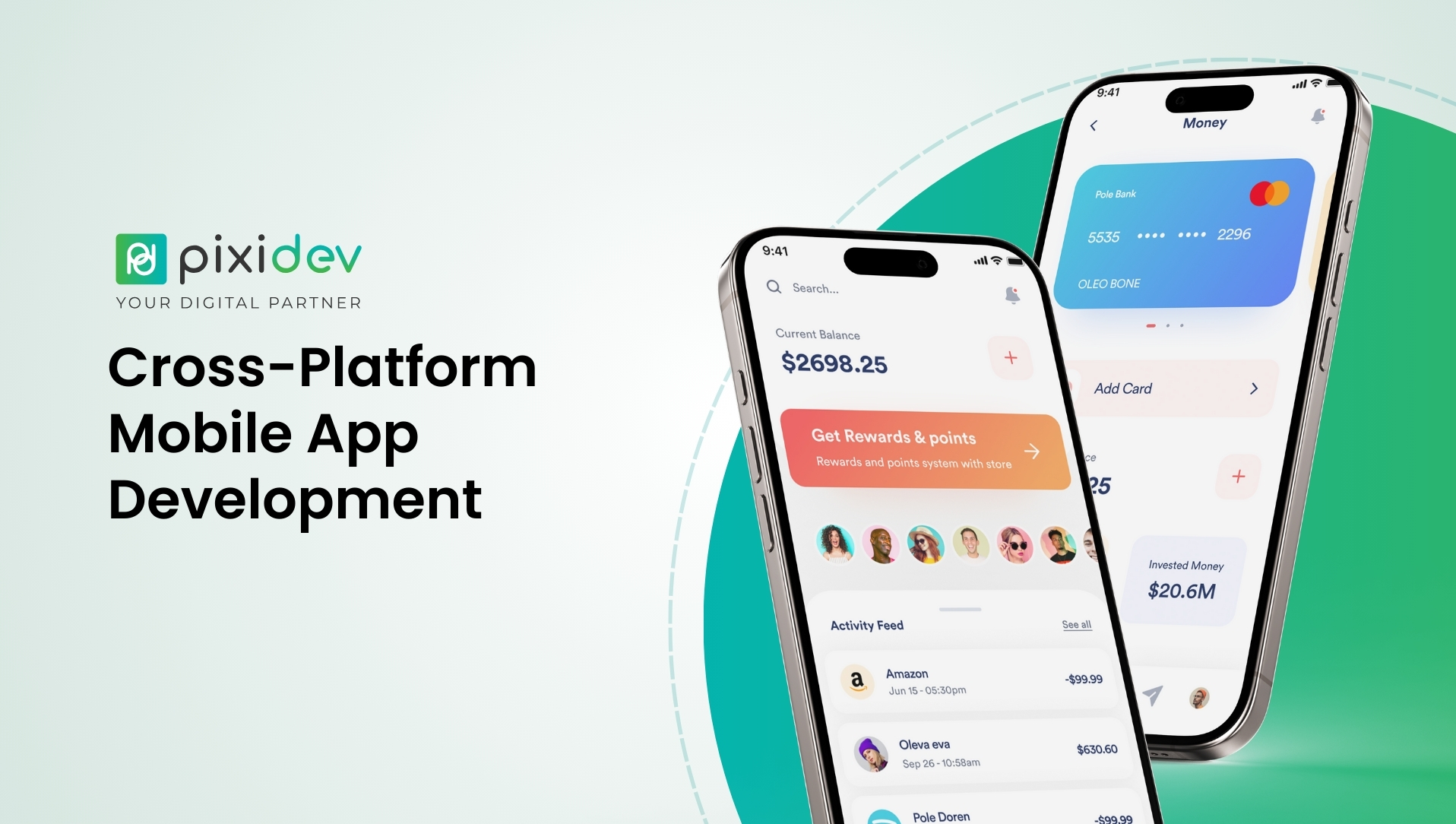
In a world where digital experiences dictate brand success, cross-platform mobile app development has emerged as a revolutionary solution for businesses hungry for rapid growth and maximum reach. Imagine building an app once and running it flawlessly across iOS and Android platforms without compromising quality, performance, or user experience. That’s the magic of cross-platform mobile app development. It simplifies the development process and saves a significant chunk of resources, which can be redirected toward innovation and scaling. The beauty of this technique lies in its capability to unify user experience while cutting down development time drastically. Why write two sets of code, spend twice the time, and double your budget when a single efficient solution can deliver everything your business needs?
Now, let’s dive into why businesses across industries, from tech startups to Fortune 500 companies, are raving about cross-platform app development benefits. The most apparent benefit is cost efficiency. Development teams can work faster and smarter with one codebase serving multiple platforms. But beyond saving money, businesses also gain the agility to respond to market demands quickly. Imagine launching a new feature or fixing a bug and rolling it out instantly across all user devices, regardless of their operating system. That’s real power. Moreover, your app’s maintenance becomes smoother and more organized. With a single codebase, you avoid fragmentation and reduce the chances of version conflicts or user experience discrepancies. These seemingly small advantages can have a massive impact on how your business scales and thrives in a mobile-first world.
While native apps have strengths, hybrid mobile app development is quickly gaining traction for good reasons. Hybrid apps combine the finest of both web and native applications. They are flexible, efficient, and capable of accessing device-specific functionalities like cameras, GPS, or push notifications while maintaining the ease of cross-platform deployment. Developers no longer have to choose between performance and efficiency; hybrid solutions give them both. This has opened up new business opportunities that must be fast, flexible, and future-ready. And let’s not forget the speed at which hybrid apps can be developed, tested, and pushed to market. In a business climate where time is currency, launching an MVP within weeks rather than months is not just an advantage; it’s a turning point.
Behind every great app is an excellent set of tools. And when it comes to cross-platform development tools, the modern tech landscape offers some remarkable options that redefine what’s possible. These tools allow developers to write robust, reusable code that adapts across platforms. Frameworks like Xamarin, Ionic, Flutter, and React Native provide components and libraries that simplify complex tasks and minimize redundancy. For businesses, this translates to faster project timelines, more consistent UI across platforms, and the flexibility to pivot when needed. It’s no surprise that CTOs and product managers are leaning into these tools to reduce overhead while enhancing productivity. The rise of these tools signals a shift in developers no longer need to be shackled to platform-specific SDKs. Instead, they can harness the efficiency and performance of modern cross-platform ecosystems.
If speed, aesthetics, and flexibility are on your radar, then Flutter app development deserves your attention. Developed by Google, Flutter enables developers to create visually stunning apps that perform as smoothly as their native counterparts. What sets Flutter apart is its unique widget-based architecture. Everything in Flutter is a widget which gives developers complete control over the app’s appearance and behaviour. That means no more worrying about UI inconsistencies between iOS and Android. This consistency is critical for businesses. It confirms that your brand is represented accurately regardless of your users’ preferred device. Flutter also allows for hot reload, a feature that enables instant updates and real-time testing, drastically reducing the development lifecycle. This speed and pixel-perfect design control make Flutter an ideal choice for brands that care about user experience and speed-to-market.
Equally dominant in the cross-platform arena is React Native development, a framework maintained by Facebook that has transformed the way developers build apps. With React Native, JavaScript developers can tap into the mobile world without learning platform-specific languages like Swift or Kotlin. This opens the doors for a massive pool of web developers to enter mobile development, accelerating project delivery and innovation. The component-based architecture of React Native makes it easy to build scalable, modular apps that can evolve with your business needs. React Native also supports native modules, allowing you to add performance-critical functionality when necessary. This hybrid model, where you get the speed of cross-platform development with the option to go native when needed, makes React Native a versatile choice for businesses aiming to deliver top user experiences while staying lean and agile.
At its core, mobile app development for businesses is about creating meaningful connections with customers, employees, and stakeholders through digital channels. Mobile apps have become essential business tools, whether it’s a customer-facing e-commerce app, a logistics dashboard for internal teams, or a community platform for user engagement. And cross-platform development supercharges this process. Due to fragmented workflows, businesses no longer need to sacrifice performance for reach or delay product launches. Cross-platform development enables agile iterations, data-driven updates, and real-time responses to customer behaviour. It’s a strategy that preserves you ahead of the curve in an ever-evolving digital marketplace. Moreover, with cloud integration, AI, and machine learning entering the mobile space, the potential of what apps can do for business is only expanding. Cross-platform apps serve as the foundation for this next frontier, giving businesses the flexibility to innovate, adapt, and grow.
In conclusion, the future of business lies in agility, innovation, digital accessibility, and cross-platform mobile app development, which delivers on all three. The benefits are too significant to ignore, from reducing costs and development time to expanding market reach and maintaining user experience consistency. With frameworks like Flutter and React Native supported by powerful cross-platform development tools, businesses can now build and scale mobile apps with greater efficiency and impact than ever before. Whether you’re looking to disrupt your industry, engage customers on a deeper level, or simplify your internal processes, accepting cross-platform development isn’t just an option; it’s a competitive necessity.
So, if your goal is to maximize your business potential in the digital age, this is the smartest, fastest, and most scalable way to get there. And the best part? You’re only one decision away from turning your vision into a reality with Pixidev by your side.